
Written by Assistant Pastor Jon Herring, Kennet Valley Free Church
Since my first sermon at KVFC (4th September2016), where I suggested I wasn’t entirely in agreement with Brian Cox’s philosophy and world view, I have chatted to a couple of people about a paper I wrote in my second year at college and some suggested they would be interested to read it. So I have published it here for you perusal!
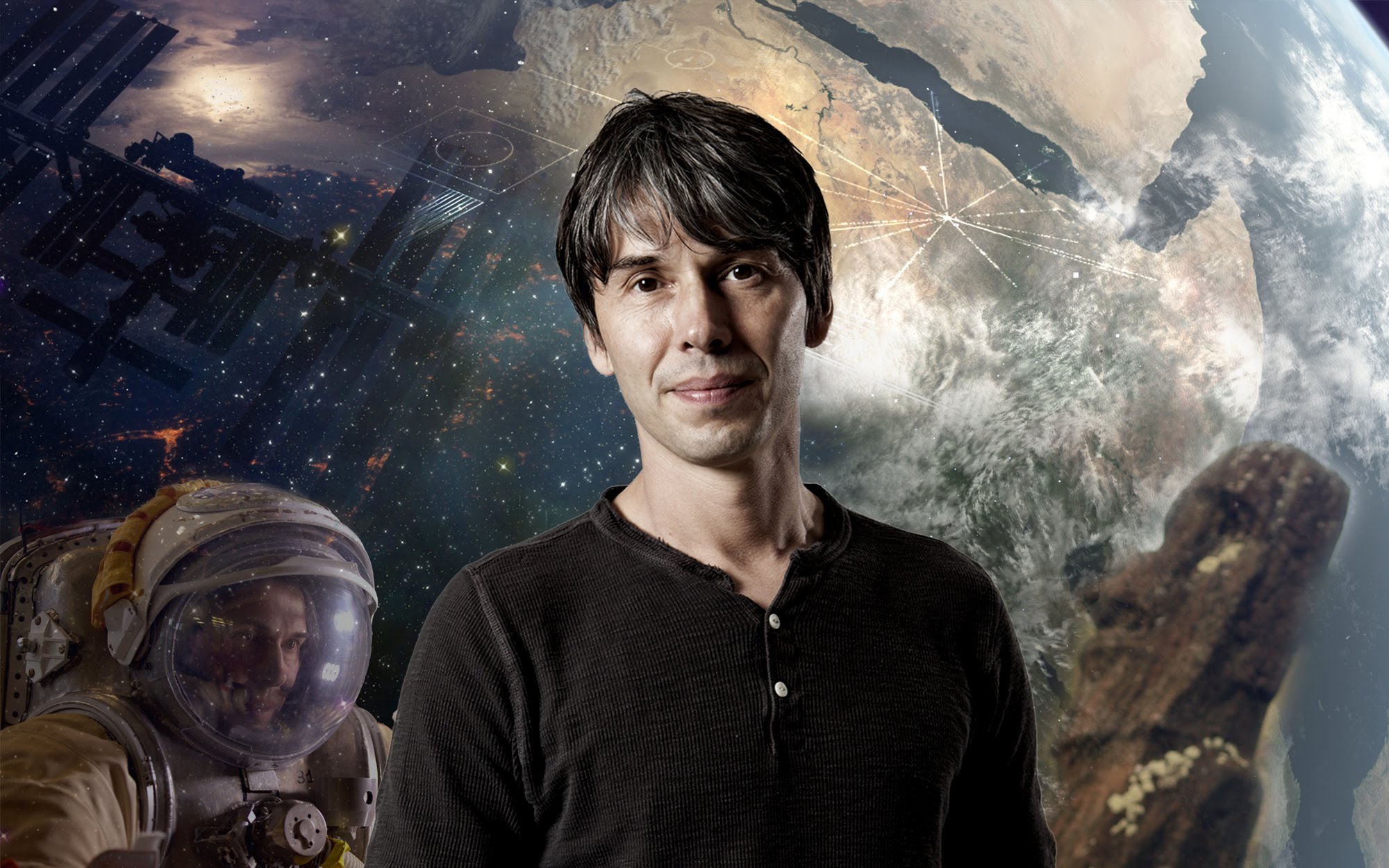
Brian Cox is professor of particle physics in the School of Physics and Astronomy at the University of Manchester. He has also, for a little while now, been groomed as the heir apparent to the ageing David Attenborough as the face of ‘science and nature’ for the BBC. His TV shows Wonders of the Universe (2012), Wonders of Life (2013), and Human Universe (2014) were a big hit and led to the publication of books of the same name that have sold in huge numbers.
A quick search for Brian Cox on the BBC website reveals that in just the last week (at the time of writing) he has appeared on the political panel show ‘This Week’ and on the BBC Radio 6 Shaun Keaveny show. Prior to that he has become the new host of Stargazing Live taking on the baton (alongside comedian Dara O’Briain) from Patrick Moore, as well as lending his voice to Bedtime Stories on CBeebies. Since November 2009 Cox has co-presented a BBC Radio 4 “comedy science magazine programme”, The Infinite Monkey Cage with comedian Robin Ince– featuring famous guests. From BBC Bitesize revision to appearances on The Jonathan Ross Show and Doctor Who, it is safe to say he has been thrust into a celebrity lifestyle and has become the face and voice of Brit ish ‘science-fact’- a hugely influential figure, highlighted in his being awarded an OBE for services to science in 2010. With his ‘handsome features and drainpipes’ (leading to him being described as “something of a sex symbol” by the Daily Mail) and former ca
reer as a rock star (key board player with D:Ream) he has pop culture credibility which has helped to catapult him up the rungs of celebrity stardom- he is truly ‘a rockstar scientist’! He communicates with superior scientific intelligence pierced with pop culture references and colloquialisms that mean he appeals to a wide audience.
In general, he speaks and writes with a softly authoritative tone, subtly (and not so subtly) undermining anything that disagrees with him; described in one sleeve note as ‘his trademark clear, authoritative, yet down-to-earth approach’. Many suggest he manages to keep his aversion to religion and faith out of his presentations and documentaries, however, I believe he is actually quite subtly aggressive.
He begins a number of the chapters of Human Universe with a tenuous, negative remark or story about the church, the bible or religion, painting an unconstructive picture of how it has historically held back scientific progress. These observations very rarely add any weight to the discussion but reveal an agenda to undermine theism and faith and to reignite the unnecessary ‘science versus religion’ debate. More over, his critiques are not, as he often assumes, actually of true biblical Christianity but of individual people, events or institutions (often the Catholic church). Further more, he is positive about the ancients and the benefits of written historical documentation when it suits him but otherwise he portrays it as archaic and antiquated.
There is an imbalance and inconsistency in his rhetoric, which he is, in some ways, aware of. Quoting John Updike, he says:
“Astronomy is what we have now instead of Theology. The terrors are less, but the comforts are nil” For me, the choice between fear and elation is a matter of perspective and it is a central aim of the book to make the case for elation.’… the very title ‘Human Universe’ appear to demonstrate an unjustifiable solipsism. How can a possible infinite reality be viewed through the prism of a bunch of biological machines temporarily inhabiting a mote of dust? My answer to this is that Human Universe is a love letter to humanity, because our mote of dust is the only place where love certainly exists.’
Cox seems to pride himself on taking a methodological solipsistic approach. However, this agnostic variant of solipsism merely provides a smoke screen that allows him to sound romantically-philosophical and emotionally superior whilst happily contradicting himself in his idolisation of science. Cox shows in this quote that he does appear to be aware of the contradictory position to some extent, but his answer ironically just amplifies the inconsistency of his juxtaposing approaches.
It seems the primary aim of all his work, indeed his life’s goal, is to raise up science and promote it as our ultimate source of wisdom and authority- to be given more credibility within culture and governmental policy because through science (and only science) will humanity development, thrive and reach its goal. However, he does it in such a way as to contradict himself because, by his own admission, he does not believe in any teleological purpose. However, as the scientific historian Thomas Kuhn writes:
What could ‘evolution’, ‘development’, and ‘progress’ mean in the absence of a specific goal? … such terms seem self-contradictory.’
And at the same time as claiming that we live in a pointless meaningless and impersonal universe, he shares a wonder at humanity and the universe/crea tion that causes him to want to write a love letter (Yet as a friend of mine said, “an impersonal universe does not send love letters” ). Of course, he would argue with the term ‘impersonal’ and he would say that our personalities are a natural conclusion of evolution, but this is a convenient plugging of the gaps that science fails to really engage with. Plugging the gaps with concepts such as evolution, eternity and infinity is of course the scientists’ own hypocritical tautology of the ‘God of the gaps’- a discussion we will return to shortly.
Another example of his contrary argument is shown in the way that he seeks to contend, through a scientific outlook, that we are not special, whilst also painting a poetic picture of what is in essence his epistemological philosophy that we should be celebrated, seen as valuable, and somewhat idolized:
‘Our cinder is not special; it is insignificant in size; one world amongst billions in one galaxy amongst trillions. But it has been a tremendous ascent into insignificance because, by the virtuous combination of observation and thought, we have been able to discover our place.’
In addition to this, he is passionate to state that we are egotistical to think of ourselves as special and at the centre of the universe- ‘the anthropocentric vision we held for so long, and which science has done so much to destroy in a million humble cuts…’ This false humility is heaped in irony when the tone of his book is full of praise for human kind and idolatry of man and our success in the world of scientific discovery- ‘This makes the human race worth celebrating, our library worth nurturing, and our existence worth protecting’. One critic of his television series was so irritated that in his critique of the programme wrote that it was Cox’s ‘assertion of the uniqueness that makes us special – that really gets up my nose, because it’s a tautology and therefore meaningless.’ It seems this commentator was so overwhelmed and irritated by Cox’s acclamation of humanity that he missed his contradictory affirmation of our meaninglessness and insignificance in such statements as: ‘We humans represent an isolated island of meaning in a meaningless universe…there is no final cause or purpose…meaning is an emergent property; it appeared on Earth when the brains of our ancestors became large…’ Although even within this statement the humans are credited with the phenomenally exceptional ability of growing their own brain matter!
The juxtaposition of these themes is what underpins the theme of the book and in so doing Cox undermines his own philosophy. They are arguments that are fueled by emotion and love. Cox has a passion for the universe and creation that is beautiful and a wonder to behold, but the obvious question in response to his urge to ‘celebrate’ and ‘protect’ our existence is- why? To what end? For what ‘meaningless’ purpose? He wants to portray a wonder and joy in the inanimate, however, wonder and joy in themselves are not mathematically/scientifically quantifiable. He worships the creation and not the creator, as Calvin says:
‘They see such exquisite workmanship in their individual members, from mouth and eyes and even to their very toenails. Here also they substitute nature for God… to deprive God of his right… praising nature they suppress God’s name as far as they can.’
His idol is science and he glorifies physics, maths and nature because it gives him a power and authority that allows him to be God and to draw the boundaries. This is exactly the appeal of Cox’s philosophy and scientific presentation. He gi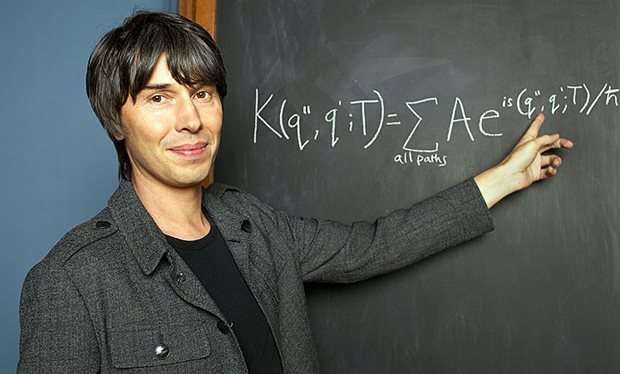 ves us a passionate and romantic portrait of the Universe, backed up by evidence and mathematical-formulae that enable the audience to ‘feel’ and express joy at our existence, whilst at the same time separating them from any real moral or philosophical implications. On this basis we are able to be our own judge, to define meaning and ‘morality’ ourselves, to play god, and ironically it shows how science (though not physically) does metaphorically place us at the centre of the universe! This is hugely appealing because we are all tempted to think like this. However, it is fundamentally inadequate, empty and idolatrous.
As I hope I have shown, the two themes he presents our contradictory; it is inconsistent to show such emotion towards an apparently meaningless and fortuitous existence. Where do these emotions and desires come from?
More over, his presentation is often hypocritical and arrogant. He judges the person of faith for filling the gaps with God, however, his approach to filling the gaps is with terms such as eternity (and multi-verse) which are based upon the faith that the current scientific research is correct. But as he himself confesses: ‘Scientific predictions are not perfect. Scientific theories are never correct. Scientific results are always preliminary…’. Surely, a scientific theory that removes a potential consideration is weaker than one that allows for all possibilities, including a creator/God. So to remove God from a hypothesis is to weaken ones experimental/investigatory capacity. Further more, I disagree with his statement that ‘science is the best we can do’ because this is based on his ‘axiom’ that God is created by humans through ‘arbitrary systems of thought’ and ‘dreamt-up human axioms’. However, he is forgetting the evidential nature of the written word, despite being an ambassador for it in his chapter entitled ‘Intermission: Beyond Memory’.
We have a special revelation from the one who created it all. He came down and revealed himself in the person and work of Jesus Christ, this was recorded in the written word and has been passed on so that we do not need to be kept in the dark about our ultimate conception but we can know the creator. We have a loving, creator God who designed us in his image, so that we can enjoy all he has given us and ultimately enjoy relationship with him through him dying on the cross to pay for our rejection of him (sin). This might not always make sense to us but as Cox writes: ‘Common sense is completely worthless and irrelevant when trying to understand reality.’ The reality is that this is how God chose to reveal himself and bring us back into relationship with him.
God is the reason we have a natural sense of awe at the universe, he is the eternal cause and sustainer of all we see and experience. Scientific discovery is beautiful precisely because it illustrates our natural revelation of the creator and our distinction as creature and the vastness of our eternal God. However, it is not sufficient! This natural revelation merely leaves us without excuse, it is meant to cause us to look for God and to discover him in the special revelation of scripture.
The result of Cox scientific study has led him to a point that he has to deny that there is a creator/designer behind it because it clashes with his philosophy and pride. The fact is, that despite saying he is not concerned with religion or philosophy, his output has become more and more philosophical, particularly in Human Universe. He has to have a defense to the argument for a creator because he has been forced to by the evidence. It is only as we understand this that we see the flaws in idolising science and holding to a methodological solipsistic approach to philosophy.
0 Comments